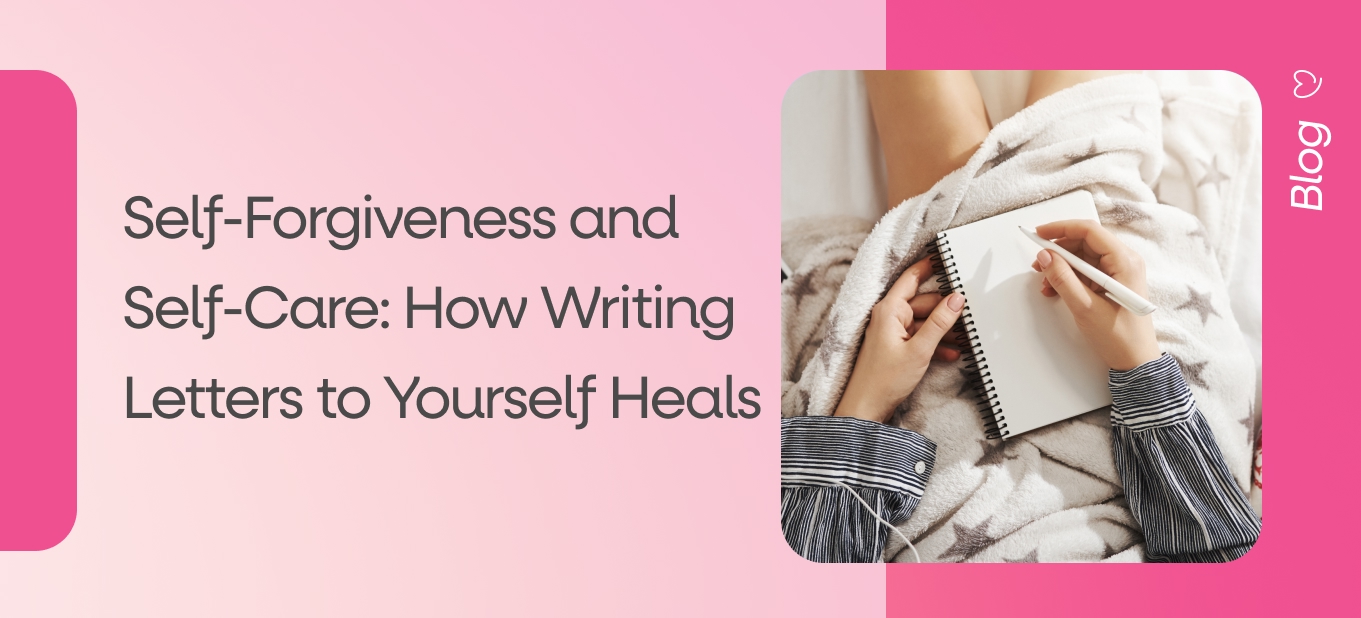

Self-Forgiveness and Self-Care: How Writing Letters to Yourself Heals
Discover the benefits of self-forgiveness and how therapeutic writing can improve emotional health. Learn how letters to yourself reduce anxiety and support real self-care.

Why Writing Letters to Yourself Heals
There’s a kind of exhaustion that sleep doesn’t fix.
It’s the exhaustion of trying to be perfect. Of replaying conversations. Of wishing you had said less. Or more.
For many women, the mind rarely rests. And sometimes the most powerful form of self-care isn’t a routine or a product — it’s self-forgiveness.
Learning how to forgive yourself is one of the most effective ways to improve emotional health, reduce anxiety, and build sustainable self-love.
Why Self-Forgiveness Matters for Emotional Health
We don’t talk enough about the quiet pressure to “get it right.” To be productive. Emotionally mature. Successful. Calm.
When we fall short of our own expectations, we often become our harshest critic.
But research in psychology shows that practicing self-forgiveness reduces rumination, lowers stress levels, and improves emotional resilience.
Real emotional health begins the moment you choose to become your own ally instead of your own courtroom.
What Is Self-Forgiveness?
Self-forgiveness does not mean excusing harmful behavior or avoiding accountability.
It means acknowledging mistakes while releasing chronic self-punishment.
Healthy self-forgiveness includes:
- Recognizing what happened
- Taking responsibility where necessary
- Offering yourself compassion
- Allowing room for growth
This process interrupts the stress cycle and softens the nervous system.
Therapeutic Writing: Why Letters to Yourself Work
One of the most effective tools for self-forgiveness is therapeutic writing.
Writing a letter to yourself helps externalize emotions instead of letting them loop internally.
Studies on expressive writing suggest that putting feelings into words reduces anxiety and improves emotional clarity.
How to Write a Self-Forgiveness Letter
- Begin with: “Dear Me, I know you were trying your best.”
- Describe what happened honestly.
- Acknowledge your feelings without judgment.
- Offer compassion instead of criticism.
- End with: “I release myself from this.”
Unprocessed emotions become words.
Words become release.

Turning Reflection Into Ritual
Self-forgiveness can feel abstract — until you anchor it to the body.
After writing your letter, take a warm shower. Apply lotion slowly. Massage your shoulders or hands.
Using Dear Me products during this moment transforms reflection into ritual. Touch signals safety. Scent grounds the mind. Repetition builds trust.
This is where emotional healing meets physical care.
Affirmations That Support Self-Forgiveness
On difficult days, try repeating:
- “I am allowed to be imperfect and still be worthy.”
- “Growth does not require punishment.”
- “I choose compassion over criticism.”
Affirmations don’t erase mistakes — they reshape your internal dialogue.
Self-Forgiveness Is the Highest Form of Self-Care
Real self-love isn’t aesthetic. It isn’t flawless.
It’s the ability to sit with your humanity and say: “I am still deserving.”
When self-forgiveness becomes part of your self-care routine, emotional well-being deepens.
Frequently Asked Questions About Self-Forgiveness
How does self-forgiveness improve mental health?
Self-forgiveness reduces rumination and chronic stress, which lowers anxiety and improves emotional resilience.
Is writing letters to yourself really effective?
Yes. Therapeutic writing helps process emotions, organize thoughts, and reduce internal tension.
How often should I practice self-forgiveness?
As often as needed. Even small moments of compassionate reflection can shift emotional patterns over time.
Final Thoughts
You don’t need to become someone else to deserve care.
Tonight, instead of replaying what went wrong, write yourself a letter. Close the notebook. Hydrate your skin. Let your body and mind soften together.
Explore rituals that support emotional well-being at dearme.us.